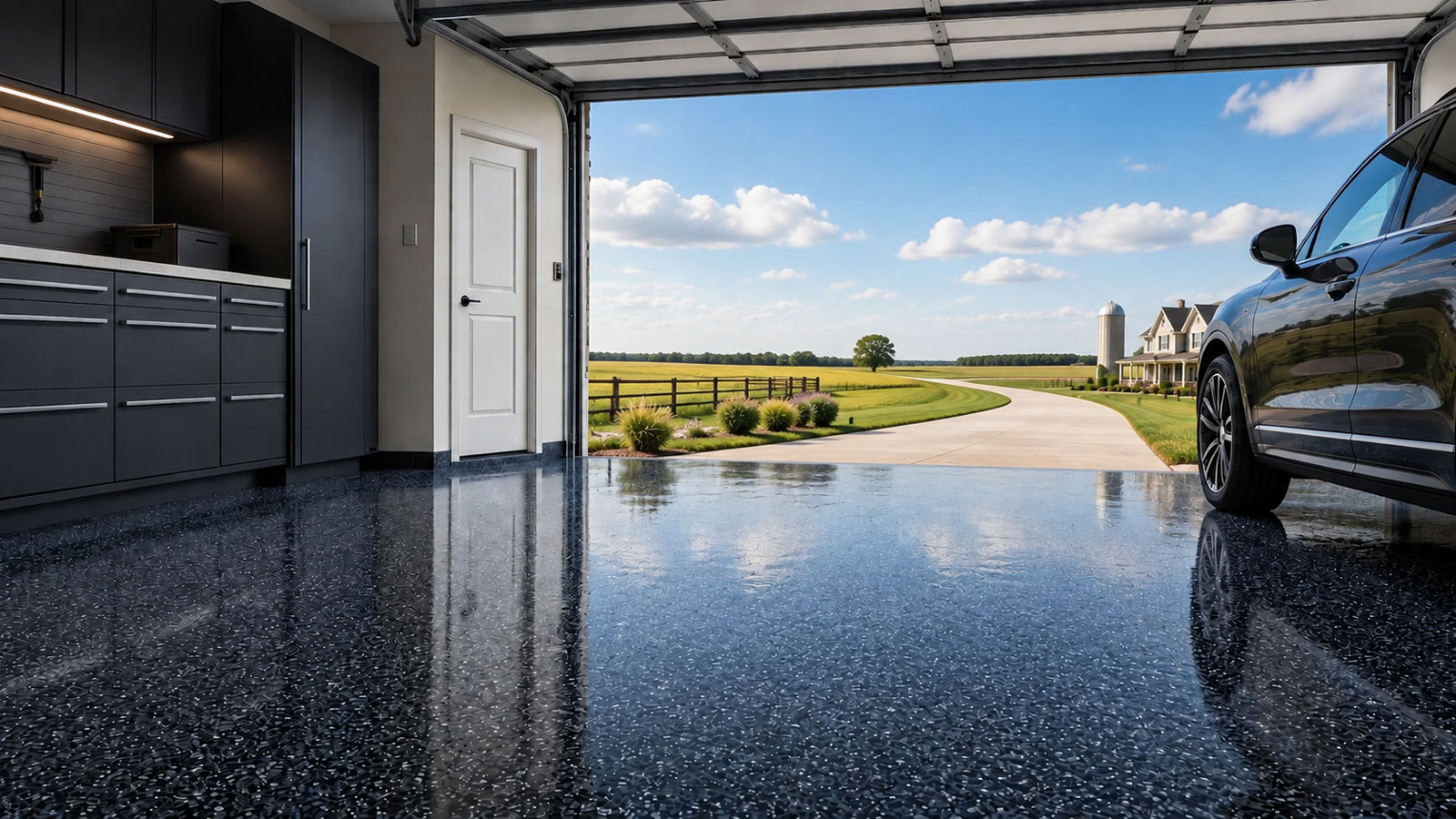
Garage Floor Coating in Austin, TX
Evaluate concrete preparation, epoxy, polyaspartic and decorative-flake garage floors in Austin.
Floor Coating Guidance for Austin, TX
Austin's garage-floor conditions cannot be summarized by a single suburban pattern. Established central neighborhoods, eastern redevelopment and recently built northern areas have different construction and remodeling histories. The city's Watershed Protection Department, created as the Drainage Utility in 1996, manages flooding, erosion and water quality throughout a complex network of creeks. In May 2026 Austin adopted the Rain to River ten-year strategy. These citywide facts provide a context for investigating water at the garage, not proof that any particular slab has moisture damage.
The city's floodplain program reports roughly ten percent of land is in a floodplain, and more than 9,000 buildings lie within its mapped 100-year floodplain. Austin also maintains over 1,100 miles of storm drain systems. That is a distinctive urban drainage landscape, but a floor coating does not reduce flood risk and an installer must not infer a specific home's water problem from a city statistic.
Central Texas heat and sun add another challenge for coatings. An open garage door exposes one strip of slab to more direct heat than the interior, and rain can carry dirt across driveways. Assess old coatings, cracked concrete, oil and actual water-entry history before choosing epoxy, polyaspartic or flake systems. Surface profile, compatible materials, traction and a realistic cure plan matter far more than the label on a can.
Local Market Insight
Austin reports 10% of land within floodplain boundaries, more than 9,000 buildings in its 100-year floodplain and over 1,100 miles of storm drains. These public facts should prompt garage-specific assessment, never an assumption of slab damage.
What Affects the Cost of Garage Floor Coating in Austin?
An established Austin garage can contain old paint or patches, whereas a newer surface may have sealer or construction residue. These differences affect work more than area alone.
Costs should reflect documented floor condition, preparation, repairs, access and a complete system. If outside runoff enters the garage, address that separately rather than treating a coating as flood protection.
- Previous surface finishes: Paint, sealers or failed coatings may need removal before new materials can bond. Appearance and building age do not establish compatibility.
- Cracks and previous repairs: Control joints, pitting and patchwork change preparation. Moving cracks or structural distress require appropriate assessment first.
- Property-specific runoff: Austin has mapped creek flood risk, but actual driveway grade, gutters and garage thresholds determine whether water affects a floor.
- Garage contamination: Parking, tools, oils and stored materials create different preparation needs, particularly in spaces used for work rather than ordinary parking.
- Edges and geometry: Steps, drains, stem walls, equipment and complex perimeters affect work beyond the floor's square footage.
- Summer application and finish: Sunlight, texture, topcoat selection and the system's curing conditions affect labor and return-to-vehicle timing.
For the fastest response, please call to discuss the project, or request an estimate online.
Austin's Creek Network and the Limits of a Floor Coating
Austin created its Watershed Protection Department's predecessor in 1996 and now maintains a broad program addressing flooding, erosion and water quality. In May 2026 the council adopted Rain to River, a ten-year strategic plan that responds to growth, infrastructure and climate concerns. The department reports more than 9,000 buildings in the 100-year floodplain and more than 300 bridges exposed to flooding. These municipal facts are not findings about the slab in a particular garage.
Austin's storm-drain network exceeds 1,100 miles, serving streets, ditches and underground systems. Some established areas developed before modern drainage standards, while infill and new development present different runoff patterns. The practical coating question is whether water at the particular property enters under the door or appears as recurring dampness through the concrete.
Inspect roof discharge, driveway slope, threshold marks and the slab itself. Runoff from outside requires grading or drainage solutions outside the scope of decorative coating. If moisture symptoms appear to originate through the slab, appropriate testing or further evaluation can be useful. A coating will not protect a garage from creek flooding or stabilize distressed concrete.
A competent proposal describes observed conditions, necessary old-coating removal, mechanical profiling, concrete repair and the full coating system. Homeowners should not pay for generic moisture remediation simply because Austin has known public flood risks.
Established Austin Garages, Summer Heat and Finished Floors
Austin combines long-established housing districts with fast-changing suburbs and commercial activity. A garage may have been painted decades ago, patched after repairs or poured well after the house was built. A recently finished slab can still contain curing compounds or sealers. The age of a neighborhood cannot determine the amount of grinding or removal needed.
Before picking epoxy or polyaspartic, examine the surface under parked tires, at expansion joints and near storage or work areas. Oil and old finishes can impair adhesion. Workshop use may require different abrasion resistance, chemical-cleaning guidance and traction from an ordinary two-car parking floor.
Central Texas summers make concrete temperature more important than an advertising claim about quick cure. Sun can heat the strip at an open door while the shaded floor remains cooler. Ask how the installer will check the manufacturer's working-time, moisture and recoat limits and when vehicles can safely return.
A decorative-flake finish may offer appearance and traction benefits where wet shoes or tires bring rain indoors, but grit, dust and oils still require cleanup. Very rough finishes can take more effort to scrub than smooth ones. Discuss actual cleaning routines and heavy equipment before selecting texture.
For a reliable bid, clear up who moves belongings, which joints and vertical edges are coated, how repairs will be handled and whether the garage must remain empty over several days. Those details matter across Austin's very different residential settings.
Frequently Asked Questions
Does Austin's creek flood risk mean my slab has a moisture problem?
No. Austin's floodplain and storm-drain data describe municipal conditions. Inspect actual water entry, damp areas and the slab before choosing tests or repairs.
Can epoxy protect an Austin garage during a creek flood?
No. Decorative coatings do not replace flood protection, drainage infrastructure or structural repairs. Correct water-entry sources separately before finishing suitable concrete.
Is polyaspartic automatically best in Austin heat?
Not automatically. Application conditions, concrete preparation, sun exposure and cure needs determine what complete system is appropriate. Ask for manufacturer-based timing.
Does older Austin housing always mean more grinding?
No. Garage slabs may have been repoured or maintained; newer floors may contain sealer. Inspect the existing finish and concrete, not only the property's age.
What should an Austin floor-coating estimate include?
Ask for material removal, grinding, repairs, all coating layers, texture, edge treatment, exclusions and the time when vehicles may safely return.
Austin Neighborhoods & Local Context
Phone Quote Line
Talk through concrete condition, coating options, and a realistic project range.
(737) 677-2022Typical Project Cost
$3,000–$5,500
Typical two-car garage range. Final pricing depends on floor size, concrete condition, preparation, coating type, and finish options.
Helpful Guides
Other Service Areas