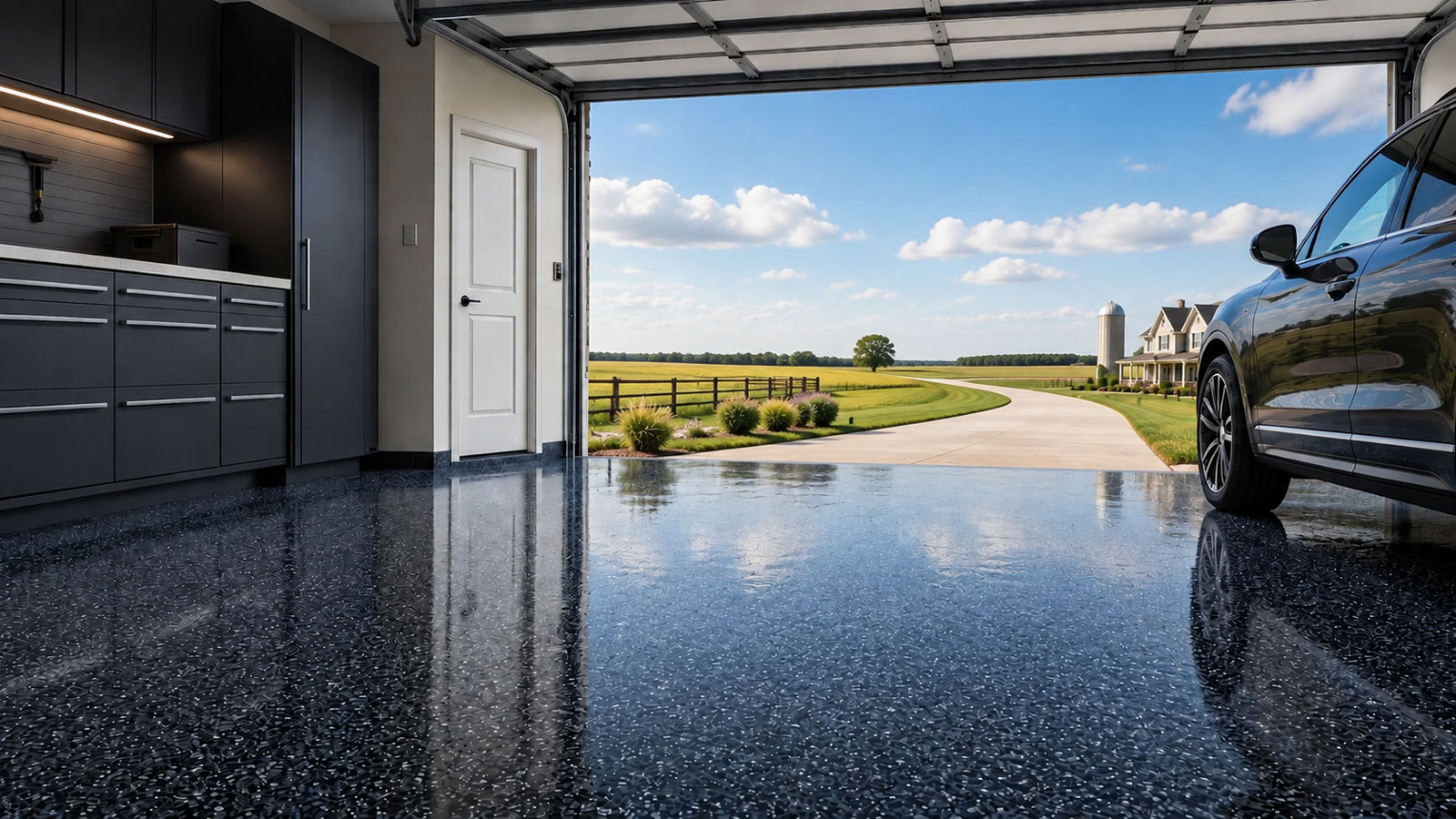
Garage Floor Coating in Round Rock, TX
Evaluate coatings and preparation for Round Rock's varied downtown, established neighborhoods and growth areas.
Floor Coating Guidance for Round Rock, TX
Round Rock has developed into a major Central Texas city, not merely a compact Austin suburb. Its Round Rock 2030 Comprehensive Plan was adopted June 25, 2020 and updated in August 2026, while the previous 2020 plan dated to 2010. The city also maintains a 2023 Density Study and population projections. Those planning records document different development eras, but a contractor should not infer the age or condition of a garage slab from when a subdivision was created.
The city specifically identifies three downtown mixed-use districts and has promoted a goal of at least 1,000 homes within a quarter mile of Main Street. At the same time, its published projections anticipate substantial development toward northeast Round Rock. That range of environments suggests variable garage layouts and uses, but no citywide projection establishes concrete damage in a specific home.
The Central Texas hot season and stormwater runoff make on-site evaluation important. Concrete near an open garage door can see intense sun, while driveway grade influences whether rain crosses the threshold. Before comparing epoxy and polyaspartic coatings, check existing sealers, cracking, patches, vehicle contamination and the actual use of the space. A finish cannot correct structural or drainage problems, and proper preparation determines long-term adhesion.
Local Market Insight
Round Rock's 2030 plan, three downtown mixed-use districts and detailed 2020–2040 projections document meaningful differences between established and growing neighborhoods, not assumed floor conditions.
What Affects the Cost of Garage Floor Coating in Round Rock?
Round Rock's older residential areas, remodeled properties and newer subdivisions can involve different previous coatings, surface treatments and entry details. Those conditions change preparation before a decorative system is applied.
Two equally sized floors might need different grinding, repairs and scheduling. Ask for an itemized estimate based on the observed slab, not the city's development growth alone.
- Surface coatings and sealer: Old paint, epoxy or new-concrete treatments may require removal or profiling. Adhesion depends on the prepared substrate.
- Cracks and earlier repairs: Joints, patched areas and spalling change work, while structural movement calls for assessment before coating.
- Threshold and water entry: Rainwater at the driveway is a property issue. Development plans do not prove moisture under the garage floor.
- Parking versus working use: Vehicle tires, hobbies and commercial uses create different oil, abrasion and cleaning requirements.
- Area and detail: Multiple bays, steps, drains, storage and vertical edges alter labor beyond measured square footage.
- Texture and curing: Decorative flake, traction, sun exposure and summer installation limits affect the full coating system and safe parking schedule.
For the fastest response, please call to discuss the project, or request an estimate online.
Round Rock's Downtown Districts and Its Northeast Expansion
Round Rock's adopted 2030 plan contains an updated land-use map and is subject to annual reporting and periodic amendments. The City Council changed housing policies in August 2026 in response to changing market conditions. A 2022 municipal projection forecast city-limits population rising from 119,468 in 2020 to 194,151 in 2040, while Greater Round Rock was projected to increase from 178,704 to 266,051. These forecasts explain the city's active growth decisions; they do not predict the condition of residential concrete.
Round Rock also has three downtown mixed-use districts, where city housing policy encourages more residences near Main Street. That contrasts with newer subdivisions expanding into the northeast. Garage configurations, paint history and previous use can differ across these environments. Yet even a historical home might have a repoured slab, while a new-looking garage may have sealer or curing compound.
The correct contractor conversation begins with the slab: identify paint, patch repairs, oil, surface wear and cracks. Determine whether incompatible treatments must be removed. Surface grinding and the full coating system should match the actual concrete and intended parking or workshop use.
Ask for a written outline of mechanical preparation, concrete repairs, layer sequence, decorative texture, edge work and cure. That is more reliable than treating the project's city or subdivision as a substitute for inspection.
Central Texas Summers, Runoff and Round Rock Garage Maintenance
Round Rock's varied development areas also make garage entry arrangements different across properties. A downtown lot, attached suburban bay or workspace near a growing commercial area might have different access, but the property's actual threshold and driveway slope matter more than these labels when assessing stormwater.
Check where gutters empty and whether water crosses the driveway during heavy rain. A recurring damp patch that persists without surface water may justify further evaluation or appropriate testing. A decorative coating cannot regrade pavement, protect against flooding or repair serious substrate movement. If water enters under the door, address that issue first.
Warm Central Texas summers can create temperature differences between sunlit outer concrete and shaded interior slab. The contractor should assess the actual surface and follow manufacturer application windows and curing limits. Fast return to parking is useful only when the system and conditions allow it.
A properly prepared coating can improve cleaning compared with unfinished concrete. But dust, rainwater and vehicle oils still require removal, and finish texture changes traction and brushing needs. Ask to see actual samples that match the intended garage use.
A complete proposal should identify old coating removal, cleaning, grinding, repairs, finishing layers and when foot and vehicle traffic are allowed. That helps owners compare choices across Round Rock's very different property types.
Frequently Asked Questions
Do Round Rock's newer subdivisions have coating-ready slabs?
Not automatically. A newer garage may still contain surface treatments or contamination. Preparation must follow the actual concrete and coating manufacturer's requirements.
Is a downtown Round Rock garage necessarily harder to coat?
No. Home age and slab age are not identical. A repaired or repoured floor may be sound, while a newer slab could require more surface preparation.
Can epoxy seal out storm runoff?
No. If driveway water crosses the threshold, drainage or entry corrections are separate work. Coatings cannot redirect the water.
Will summer heat change the cure time?
It may. A sunlit threshold can have a higher substrate temperature than the interior, and curing must follow the selected system's actual limits.
What should Round Rock bids specify?
Ask for concrete preparation, repairs, complete layers, finish texture, edging, weather constraints and a clear date for vehicle use.
Round Rock Neighborhoods & Local Context
Phone Quote Line
Talk through concrete condition, coating options, and a realistic project range.
(737) 677-2022Typical Project Cost
$3,000–$5,500
Typical two-car garage range. Final pricing depends on floor size, concrete condition, preparation, coating type, and finish options.
Helpful Guides
Other Service Areas