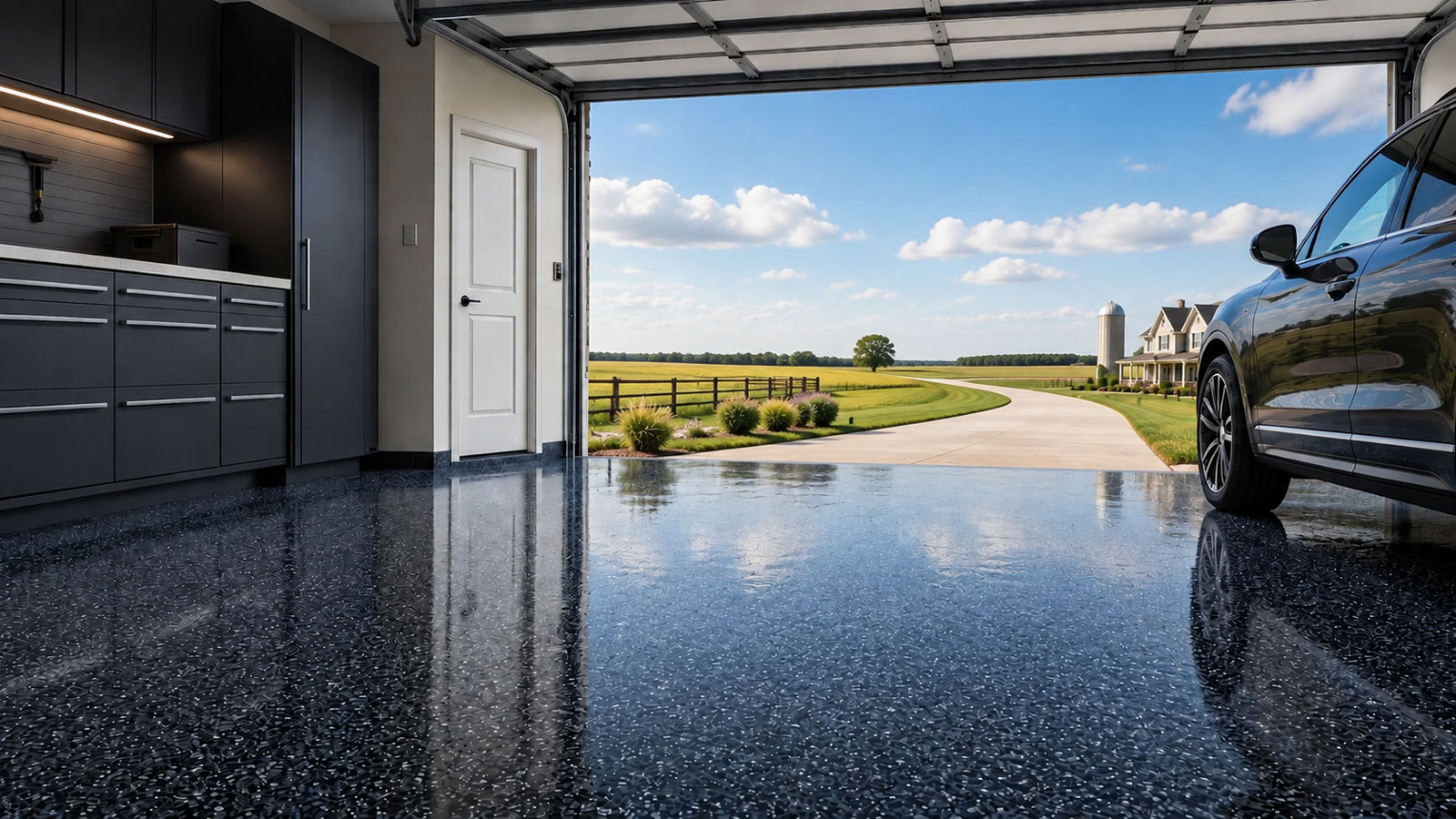
Garage Floor Coating in Georgetown, TX
Understand concrete preparation and floor coating choices across Georgetown's historic core, Sun City and growth areas.
Floor Coating Guidance for Georgetown, TX
Georgetown has a particularly varied property landscape. Its updated Georgetown 2030 planning document describes a city founded in 1848 and home to a historic courthouse square, Southwestern University and the Sun City retirement-oriented community. It identifies 38,048 acres within the city limits and an additional 78,141 acres of extraterritorial jurisdiction. That broad geography creates different residential and garage contexts, but neither property age nor community branding establishes whether a slab is sound or ready for coating.
The city's physical geography also varies. The updated plan describes the Hill Country edge and Edwards Aquifer setting to the west, Blackland Prairie toward the east and the North and South Forks of the San Gabriel River meeting near the city's center. These are distinctive local conditions relevant to planning for runoff and water management, not proof of moisture inside any specific garage.
Hot Central Texas summers and occasional heavy rain add practical garage-floor choices. A contractor should examine actual old finishes, cracks, oil contamination, threshold drainage and sun exposure before recommending epoxy or polyaspartic. A decorative-flake finish can offer useful traction, but its long-term performance depends on proper surface preparation, the complete coating system and realistic cure time.
Local Market Insight
Georgetown's 2030 plan documents its 38,048 city acres plus 78,141 ETJ acres, the meeting of the San Gabriel's two forks and the contrast between Sun City and historic downtown. These are local clues, not slab diagnoses.
What Affects the Cost of Garage Floor Coating in Georgetown?
An older Georgetown accessory garage might have paint or patchwork, while a newer Sun City or suburban floor may contain sealer or other treatments. Equal square footage does not mean equal preparation work.
A contractor should scope actual damage, grinding, old-coating removal, edge details and finish layers rather than set costs by neighborhood name. Water-related work should follow evidence at the lot.
- Prior slab finish: Old paint or sealers can require removal and grinding. The construction era does not show exactly which treatments are present.
- Concrete condition: Cracks, spalling, repairs and joints influence work. Serious structural distress cannot be concealed under a new decorative surface.
- Entryway runoff: The San Gabriel watershed gives geographic context but each property's gutters, grade and wetting history must be examined.
- Garage use: Parking, tools or hobby activities create different oil, abrasion and cleaning requirements, influencing the complete system.
- Edges and layout: Irregular bays, steps, drains, stem walls and cabinets change labor beyond floor measurements.
- Coating and cure: Texture, topcoat, sun exposure and summer conditions influence material choices and the date vehicles may return.
For the fastest response, please call to discuss the project, or request an estimate online.
Georgetown's Historic Core, Sun City and Concrete History
The Georgetown 2030 plan update describes a community founded in 1848, with Southwestern University, a nationally recognized courthouse square and Sun City among its defining features. Its city limits cover more than 59 square miles, while its ETJ brings the total planning area above 181 square miles. This is a substantial range of development environments, not a single type of suburban garage.
An older downtown property might have a garage added long after its house was built; a more recent home may have concrete with a sealer or curing treatment. The right coating recommendation begins with what is actually on the slab: peeling paint, oily patches, hairline cracks, old repairs or visible deterioration. Age alone is not a sound diagnostic.
Where a garage is used as a workshop, tool storage or daily parking, discuss the real traffic, wheels, chemicals and desired cleaning routine. A decorative surface may look similar across those uses but require different primers, texture or topcoats. The whole system should be specified around the prepared concrete.
Request bids that distinguish mechanical profiling, crack repair, old-finish removal, each coating layer, edge work and the cure schedule. This keeps comparisons practical across Georgetown's different residential settings.
The San Gabriel Forks, Summer Weather and Garage Water
The city's long-range plan describes the North and South Forks of the San Gabriel River meeting near San Gabriel Park, with the Edwards Aquifer and Texas Hill Country influencing the western geography and Blackland Prairie extending east. These are meaningful local environmental conditions that affect broader drainage planning. They cannot tell an installer that a particular garage floor has water intrusion.
For a coating project, ask whether roof gutters discharge toward the driveway, whether the entryway slopes toward the door and whether any wet marks appear inside. If stormwater actually enters from the surface, drainage correction may be needed first. A coating cannot change the path of runoff or provide flood protection.
A recurring damp patch with no visible source may warrant further concrete evaluation or appropriate moisture testing. But do not assume every river-adjacent or hilly Georgetown home has the same substrate condition. The inspection should distinguish legitimate concerns from generalized local geography.
Central Texas summer heat also affects application: a slab near the open garage door may be significantly warmer than the shaded interior. Follow the manufacturer's temperature and cure guidance rather than select a system solely because its marketing promises quick parking return.
After installation, wet-footwear traction, cleaning grit and vehicle oils remain relevant. Discuss decorative-flake texture and maintenance preferences, then ask for a clear schedule covering grinding, repair, coating and cure.
Frequently Asked Questions
Does Georgetown's older downtown mean the garage slab is old?
Not necessarily. Garages may have been built later or concrete repoured. Inspect its current finishes, damage and repairs rather than infer age from the house.
Do San Gabriel River waterways mean moisture under my slab?
No. Watershed geography and mapped flood conditions do not diagnose a garage. Evaluate actual drainage and any persistent dampness separately.
Is Sun City concrete automatically easier to coat?
No. A newer-looking floor can contain sealer or construction treatments requiring preparation. Ask for proper surface inspection and profiling.
Does the summer temperature matter?
Yes, potentially. Sunlit outer concrete can be hotter than shaded slab sections, so application and curing should follow manufacturer limits.
What should a Georgetown quote cover?
Look for preparation, repair, removal of old finishes, complete system layers, texture, edges and the time before vehicles can return.
Georgetown Neighborhoods & Local Context
Phone Quote Line
Talk through concrete condition, coating options, and a realistic project range.
(737) 677-2022Typical Project Cost
$3,000–$5,500
Typical two-car garage range. Final pricing depends on floor size, concrete condition, preparation, coating type, and finish options.
Helpful Guides
Other Service Areas