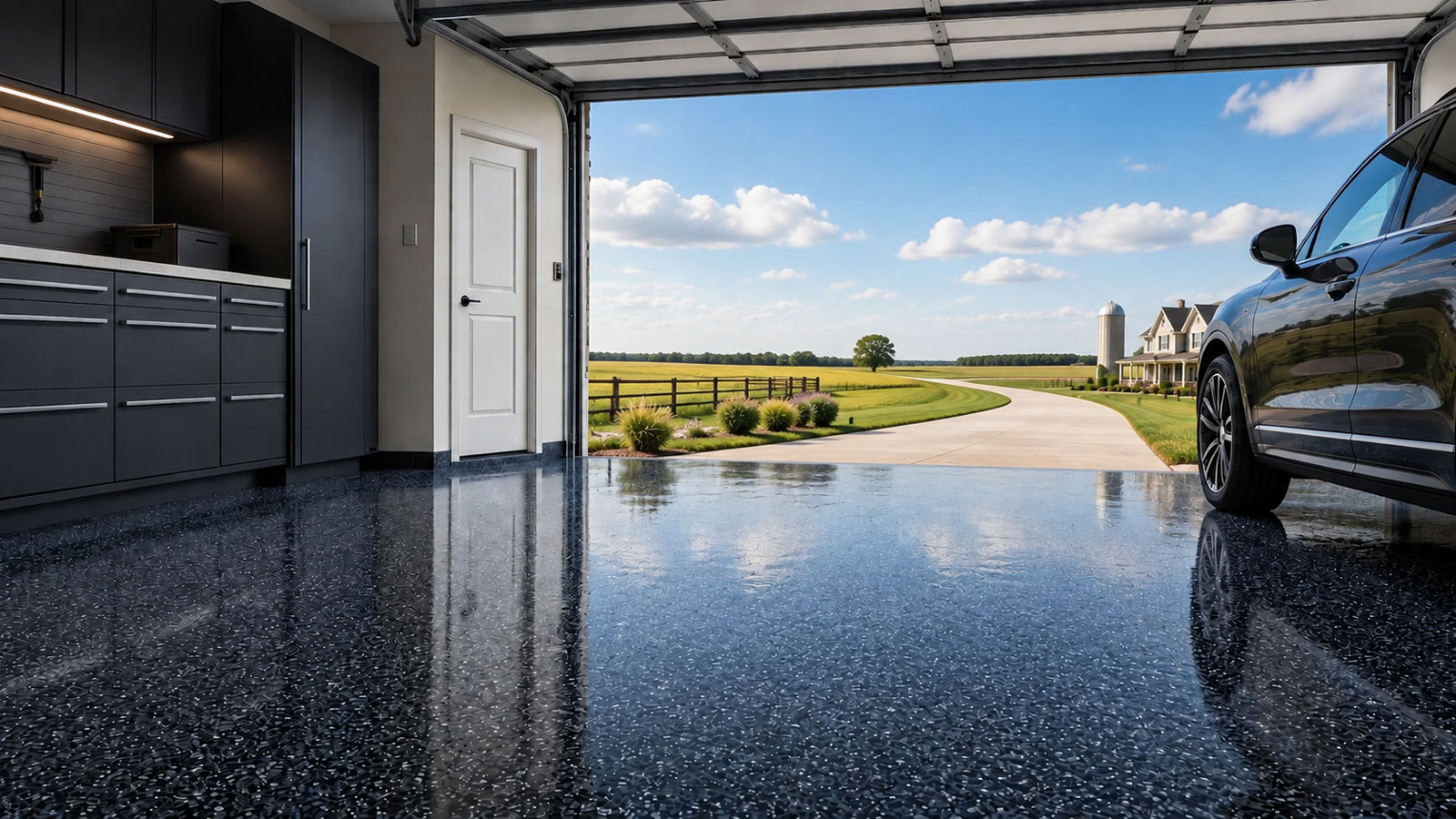
Garage Floor Coating in Taylor, TX
Compare garage and working-floor coating decisions for Taylor's historic downtown and emerging industrial corridors.
Floor Coating Guidance for Taylor, TX
Taylor has an unusually well-documented transition from an established historic town into a major industrial growth center. The city adopted Envision Taylor on November 18, 2021, amended it in 2022 and 2023, and later expanded planning around Samsung's semiconductor investment. A 2025 Downtown Master Plan separately addresses the older urban center, while a 2026 Water and Wastewater Master Plan focuses on infrastructure for future growth. Those contexts suggest varied garage and working-floor uses, not guaranteed defects in any private concrete slab.
Taylor has also completed a Drainage Master Plan in 2022 specifically to address known citywide flooding concerns and prioritize future projects. That makes inspection of driveways, thresholds and actual water-entry histories useful, but a city drainage plan cannot establish which garages are wet. A coating is not a substitute for grading or stormwater protection.
The Central Texas hot season further affects material selection and cure. Sunlit garage doors can expose concrete to higher temperatures than the interior, and workshop or vehicle use can leave oil and chemical residues. A professional epoxy or polyaspartic proposal should be based on proper inspection, old-finish removal, cracking, traffic and the complete coating system rather than copying a generic suburban garage specification.
Local Market Insight
Taylor's 2021 Envision plan, 2022 drainage master plan, 2025 downtown study and 2026 utility plan record simultaneous historic preservation, flood planning and large-scale industrial development.
What Affects the Cost of Garage Floor Coating in Taylor?
Taylor's old-town properties, newer residential buildings and working industrial spaces may require distinct preparations, finishes and downtime arrangements. A two-car garage and a production-related work area are not comparable solely by area.
Bids should identify actual surface wear, contamination, old coatings, repairs and coating layers. Exterior drainage corrections should be separated from decorative flooring.
- Paint or treatment removal: Established floors may have old paint, while recently finished concrete can contain compounds requiring removal before reliable adhesion.
- Repair and cracking: Patched joints, spalling and other concrete distress need appropriate evaluation; serious movement should not be concealed.
- Runoff and water entry: Taylor's 2022 Drainage Master Plan addresses citywide issues, but a garage's actual threshold and runoff pattern must be checked independently.
- Traffic and working use: Workshops and commercial spaces may experience wheels, chemical spills and downtime requirements differing from simple home parking.
- Floor layout: Steps, drains, additional bays, edges and equipment may change grinding or coating labor beyond square footage.
- Coating selection and curing: Decorative texture, topcoat durability, sun exposure and summer substrate temperature affect materials and vehicle-return timing.
For the fastest response, please call to discuss the project, or request an estimate online.
Envision Taylor, Samsung Growth and Different Floor Uses
Taylor adopted its Envision comprehensive plan November 18, 2021, amended it in May 2022 and March 2023 and developed related land-use updates around Samsung's semiconductor facility. The plan established a Special Employment District in connection with the manufacturing investment, while the city also completed a 2025 Downtown Master Plan and a 2026 Facilities Master Plan. These documents define a distinctly mixed residential, historic and industrial planning environment.
Such context matters when identifying the intended use of concrete floors but is not proof of any particular substrate condition. A domestic garage may have old paint, repaired joints or vehicle-oil stains. A working commercial floor may face tools, wheels and chemicals that alter the specification. If the work is only ordinary parking, industrial-grade claims may not add value compared with sound preparation and a suitable residential system.
Before selecting epoxy or polyaspartic, examine the slab for incompatible finishes, cracks, surface wear, and potential contamination. A newer-looking floor can have curing residue or sealer. A historical property may have had a replacement slab long after the building went up. Both require property-specific inspection.
A written estimate should explain removal of earlier coatings, grinding, cracks and other repairs, layer sequence, texture and downtime. The proper comparison is complete scope and suitability for use, not a product name associated with Taylor's industrial growth.
Taylor's Drainage Master Plan and Hot-Weather Coating Conditions
Taylor reports that its 2022 Drainage Master Plan was developed in response to flooding concerns around the municipality and that its recommendations are being advanced using local and grant funding. Separately, the city updated its Water and Wastewater Master Plan in 2026 to plan for growth outside older limits. Those infrastructure changes explain the area's evolving utility and runoff context, but do not diagnose any particular homeowner's garage.
Look for rainwater crossing the driveway, downspouts emptying toward the slab, watermarks under the door or damp patches that persist without surface water. Depending on evidence, correcting exterior drainage or conducting a targeted moisture assessment may be warranted. Applying decorative coating over an unresolved water source can waste money and does not offer flood protection.
Heat creates its own limits. Concrete at an open garage entry can be significantly warmer than shaded slab, affecting some coatings' application and curing. Follow the manufacturer's actual temperature, moisture and recoat requirements. A quick-return system should only be used where it fits site conditions and the owner's parking schedule.
For everyday garage cleaning, choose a texture appropriate to water, dirt, oil and rolling equipment. Decorative flake can improve appearance and offer traction options, but a very rough finish may be harder to scrub. Neither smooth nor textured surfaces eliminate ongoing maintenance.
Ask the installer to document grinding, repairs, full coating layers, finish and safe time for vehicles or equipment to return. This protects the flooring investment across both Taylor's historic homes and new development settings.
Frequently Asked Questions
Does Taylor's Samsung investment mean I need industrial epoxy?
No. Industrial growth is citywide context. Home-garage coating should reflect its actual concrete, parking or workshop use, traffic and cleaning requirements.
Do Taylor's drainage studies prove my garage will flood?
No. The 2022 Drainage Master Plan concerns municipal flood planning. Inspect the property itself for runoff, water entry and concrete symptoms.
Can a coating cover cracks without repairs?
Cracks and deteriorated areas need evaluation and appropriate preparation. Serious structural movement requires further attention beyond decorative finishing.
Does summer sun affect curing?
Yes, potentially. Sunlit concrete can be warmer than shaded surfaces, and the selected manufacturer's application and cure requirements must be followed.
What should Taylor coating bids include?
Look for removal of existing finishes, concrete grinding, repairs, complete layers, texture, edges, downtime and any excluded drainage correction.
Taylor Neighborhoods & Local Context
Phone Quote Line
Talk through concrete condition, coating options, and a realistic project range.
(737) 677-2022Typical Project Cost
$3,000–$5,500
Typical two-car garage range. Final pricing depends on floor size, concrete condition, preparation, coating type, and finish options.
Helpful Guides
Other Service Areas